Nov 12, 2025
Money2020 - Special Episode 2025 - Part 1
FinWise EYE ON:

Keeping an EYE ON all things in the Fintech Banking universe. A podcast from FinWise Bank. www.finwise.bank. FINW.





Episodes
Episodes



Oct 7, 2025
Oct 7, 2025
38 min
In this episode of the FinWise EYE ON: podcast, hosted by Sarah Grotta, Deputy Chief Fintech Officer at FinWise Bank, the focus is on the current environment for innovative fintechs in the U.S. Sarah is joined by Trevor Tanifum from FS Vector, a firm that helps fintechs with compliance and becoming ‘bank ready.’
Trevor explains the three practice groups within FS Vector: advisory, licensing, and advocacy. The discussion covers the day-to-day activities of advising fintechs, the intricacies of partnering with banks, and the importance of presenting a well-prepared compliance framework to avoid risks.
They also delve into the regulatory environment in Washington, touching on the impact of administrative changes on policy and enforcement. The podcast wraps up with insights on topics like the rising interest in stablecoins, the challenges of launching fintech products, the competitive banking partnership landscape, and the implications of current data privacy and access regulations.

Sep 15, 2025
Sep 15, 2025
30 min
Enhancing Corporate Payments with Strategic Innovation with Alex Jimenez, Lead Principal Consultant from Backbase
In this episode of the FinWise EYE ON: podcast, host Sarah Grotta is joined by Alex Jimenez, Lead Principal Strategy Consultant at Backbase, to discuss the trends and future of corporate payments. They delve into the lag in user experience for corporate payments compared to consumer-side innovations, and explore the current state and challenges in the industry. Topics covered include the role of real-time payments, the complexity of implementing digital solutions for businesses, and the potential impact of technologies like stable coins and AI. Alex shares insights from his experience and recent conversations with business leaders, offering a grounded perspective on the future of financial solutions in the corporate sector.
https://www.alexrjimenez.com/
https://www.backbase.com/insights/podcasts

Aug 27, 2025
Aug 27, 2025
40 min
In this podcast episode, Sarah Grotta and Tom Brown discuss the evolving role of stablecoins in the U.S. financial landscape. They explore the impact of stablecoins on banking and payments, the concept of deposit tokens, and how banks and merchants are adapting to these changes. The conversation also touches on regulatory developments, investment trends, and the potential use cases for stablecoins and deposit tokens in the future.
Takeaways
Stablecoins are gaining traction and have significant potential.
The regulatory landscape is evolving, impacting stablecoin adoption.
Banks are exploring how to integrate stablecoins into their operations.
Merchants see stablecoins as a way to improve payment processes.
Deposit tokens represent a new way to manage bank deposits on-chain.
The Clarity Act provides a clearer framework for stablecoin issuance.
Investment trends in fintech are influenced by market dynamics.
Understanding the differences between stablecoins and deposit tokens is crucial.
Operational improvements are a key focus for merchants adopting stablecoins.
The future of stablecoins will depend on regulatory clarity and market acceptance.

Jul 29, 2025
Jul 29, 2025
50 min
In this episode of the FinWise EYE ON: Podcast, host Simon Darchis and guest David Peterson, Chief Credit Officer at Elevate, delve into the transformation of credit and marketing models in financial services. They discuss the role of AI, data science, and statistical models in improving credit underwriting and customer engagement, particularly in the subprime space.
The conversation explores the ethics of marketing models, the evolution of credit modeling, and the potential impact of AI and machine learning in fraud detection and customer targeting. They also tackle challenges like the recent move by Chase to charge for data access, highlighting its potential implications for fintechs and consumers.
Meet David Peterson: Elevate's Chief Credit Officer
Elevate's Mission and Services
Understanding Non-Prime Consumers
Building Effective Credit Models
Alternative Data in Credit Modeling
Evolution of Elevate's Credit Models
Challenges in Credit Modeling During Economic Shifts
Fraud Detection and AI Innovations
Supervised vs. Unsupervised AI in Lending
The Role of AI in Fraud Detection
Marketing Models and Customer Targeting
Ethical Considerations in Subprime Lending
The Future of AI and Data in Finance
Conclusion and Final Thoughts
David Peterson
Elevate

Jul 14, 2025
Jul 14, 2025
42 min
Summary
In this episode of FinWise EYE ON podcast, Sarah Grotta and Ben Jackson, COO of the Innovative Payments Association, discuss the evolving landscape of Fintech, focusing on the implications of recent regulatory changes, particularly the rise of stablecoins and the Genius Act. They explore the potential use cases for stablecoins, the challenges they may face, and the current regulatory environment affecting the financial services industry. The conversation also touches on the importance of education and compliance in navigating these changes.
Takeaways
The Innovative Payments Association focuses on creating a conducive regulatory environment for payments.
Stablecoins aim to address the volatility issues associated with cryptocurrencies.
The Genius Act seeks to clarify the rules around stablecoin issuance.
Stablecoins could significantly impact traditional payment methods and financial services.
There is a need for education to build trust in stablecoins among consumers.
The current regulatory environment is seeing a shift towards less aggressive enforcement.
The CFPB's budget cuts may affect its ability to regulate effectively.
Stablecoins could provide new opportunities for businesses in payment processing.
The industry must prepare for potential regulatory changes as political winds shift.
Compliance education is crucial for navigating the evolving financial landscape.
IPA Compliance Bootcamp - September 11, 2025 - Chicago
Jul 8, 2025
Jul 8, 2025
49 min
Summary
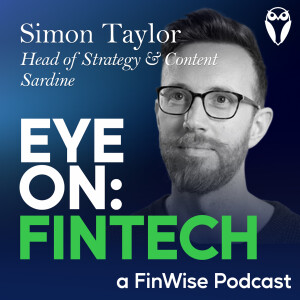
In this episode of the FinWise EYE ON: podcast, Simon Darchis and Simon Taylor delve into the evolving landscape of stablecoins, exploring their definition, mechanisms, and implications for traditional financial institutions. They discuss the importance of trust and reserve management, the challenges of market fragmentation, and the potential for stablecoins to coexist with central bank digital currencies. The conversation also touches on regulatory considerations, the future of payments, and the impact of stablecoins on traditional banking, highlighting the need for innovation and adaptation in the financial sector.
Takeaways
Stablecoins are designed to reduce volatility in cryptocurrency markets.
They are pegged to stable assets like the US dollar to maintain value.
Trust in stablecoins relies heavily on the issuer's reserve management.
Market fragmentation poses challenges for stablecoin interoperability.
Central bank digital currencies may coexist with stablecoins in the future.
Stablecoins are already being used in cross-border transactions.
Regulatory frameworks are evolving to accommodate stablecoins.
Banks must innovate to retain deposits in the face of stablecoin competition.
The rise of stablecoins could lead to a shift in traditional banking practices.
Shadow banking risks may increase with the growth of stablecoins.
Global Digital Finance
Sardine
FinWise Bank
Jun 25, 2025
Jun 25, 2025
29 min
Summary
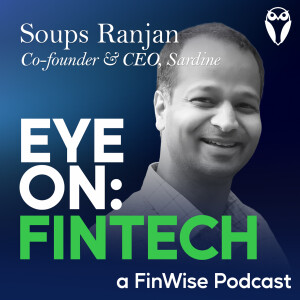
In this episode of the EYE ON: Fintech podcast, Kenzie Mexican speaks with Soups Ranjan, co-founder and CEO of Sardine AI, about the evolving landscape of fraud prevention in the financial services sector. They discuss the impact of AI on fraud tactics, the importance of behavioral biometrics, and how Sardine is addressing challenges like authorized push payment scams and synthetic identities. Soups shares insights on leadership in fraud prevention and the future of AI in enhancing compliance and risk management.
Takeaways
Soups Ranjan has a PhD in electrical and computer engineering and has spent his career fighting fraud.
Sardine AI focuses on intrinsic behavior biometric features for identity verification.
AI is being used to streamline compliance and fraud operations, significantly reducing manual workloads.
Behavioral biometrics can detect anomalies in user behavior that indicate fraud.
Transparency in AI models builds trust with operations teams.
AI can help financial institutions increase their speed to revenue by automating processes.
Sardine's approach combines machine learning with rules-based systems for effective fraud detection.
The use of behavioral data does not involve personally identifiable information (PII).
Sardine's tools are designed to combat synthetic identities by cross-referencing multiple data points.
Leadership in fraud prevention requires being hands-on and understanding team challenges.

May 27, 2025
May 27, 2025
37 min
Summary
In this episode of the FinWise EYE ON: podcast, Sarah Grotta speaks with Miladys Felix from Discover Network about the intricacies of launching a successful credit card program. They discuss Miladys' career journey and the unique position of Discover Network in the global payments landscape. The conversation also covers innovations in payment solutions, the rise of fintechs in the credit card space, and the challenges involved in navigating the credit card value chain. Miladys emphasizes the importance of creating streamlined solutions for partners and the need for creativity in overcoming contractual and operational hurdles.
Takeaways
Miladys Felix shares her journey into the payments industry.
Discover Network operates three brands: Discover, Diners Club, and Pulse.
Discover Network processed around 622 billion in spend value globally in 2024.
Innovations like tap on mobile and faster payments are gaining traction.
Fintechs are driving consumer loyalty through innovative credit card offerings.
Commercial credit cards are becoming essential for businesses to manage expenses.
The credit card value chain involves multiple players and complexities.
Creating a packaged solution can simplify the go-to-market process for partners.
Understanding roles and responsibilities is crucial for successful credit card program implementation.
Army & Air Force Exchange Service to Collaborate with Discover® Global Network to Expand MILITARY STAR Card Acceptance
5 Consumer Payment Trends Shaping How We Pay in 2025
Miladys on Linkedin